

Donald Duck and the Leviathan: The Tramp Steamer
Carl Barks and Donald as Fitzcarraldo

Coming off of two big adventure stories, The Tramp Steamer (WDC&S #53, February 1945) has Barks integrating adventure flavor into the ten-page comedy stories. The result is odd: the scope is suddenly way larger, but that just feeds the comedy.
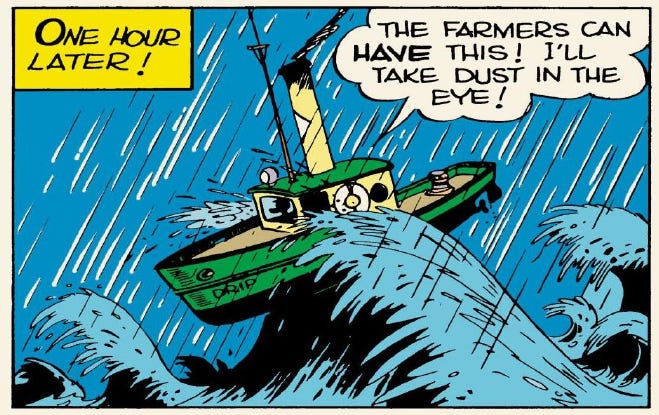
The impetus, I believe, was simply that Barks was finding a real love for nature drawing and seascapes in particular, and so he wrote a story that gave him an excuse to draw a lot of them. After Donald buys a cargo steamship, Barks gets to do a seastorm as he did in Pirate Gold:
But it also allows for gags like what happens after they dump their soap shipment into the water:
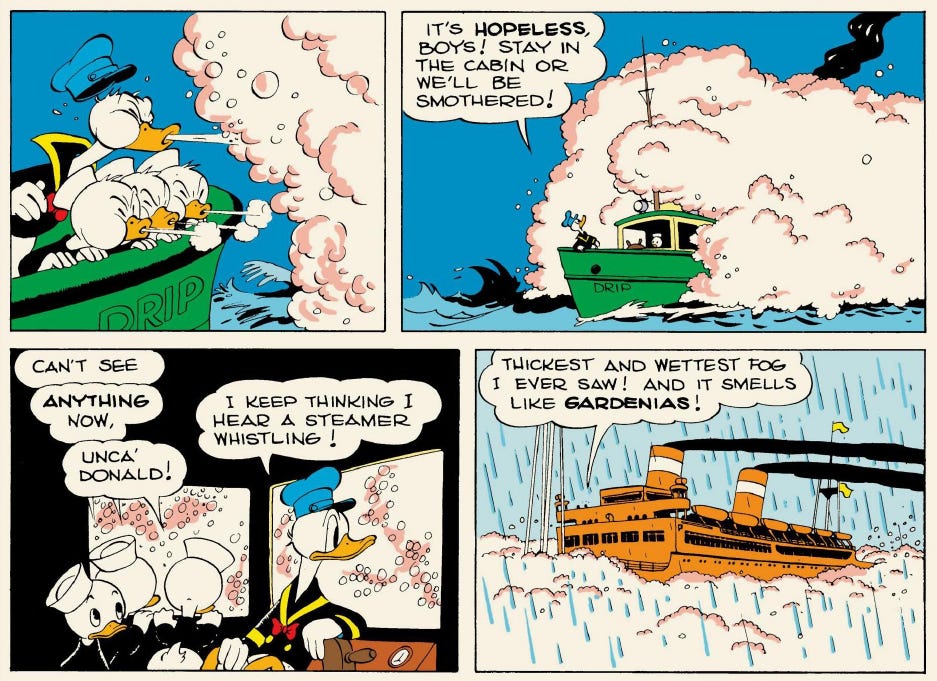
The gags aren’t so different from what Barks has done in the past, but they are bigger.
The initial impetus is money, as became standard for Barks’s duck stories. Having been fired from some “factory,” Donald gets suckered into buying a cheapo cargo ship.
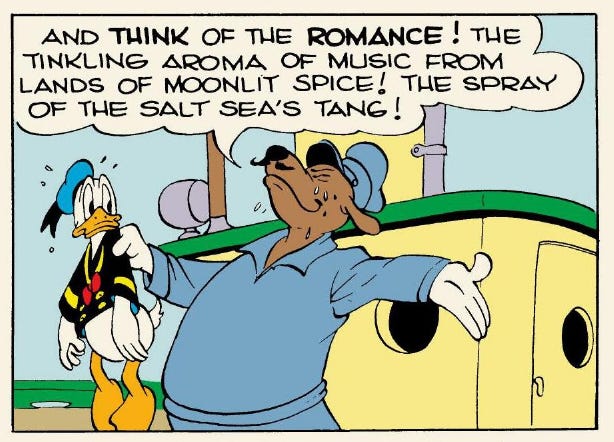
The sailor is a less slick duplicate of conman Honest Hal from “Donald’s Bay Lot,” using the same body language to sucker Donald, and the story does resemble that one, down to its piecemeal feeling. Here, Donald is more a victim of the hardsell than a sucker for a con, but the scenario is essentially the same: Donald gets steamrolled by rhetoric.
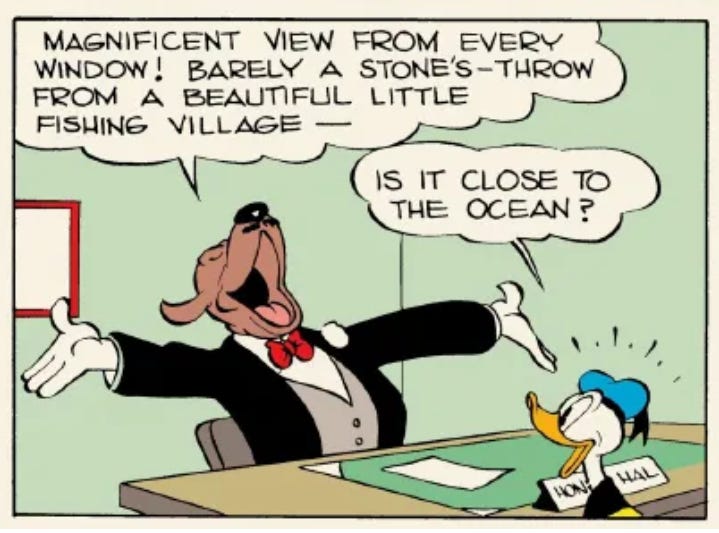
Barks’s own language tends to be quite concise, and his rhetorically effusive characters tend to be negative. The logistics of this story make Donald’s language even more plain and functional than usual.

Having set up the scenario, though, Barks doesn’t push through much of a unifying thread, just a sequence of complications and gags. What’s new is the sheer scope of the gags, like the adventure stories were intruding into the montly ten-pagers.
After the storm, Donald takes up a bean shipment, only to run into…the leviathan.
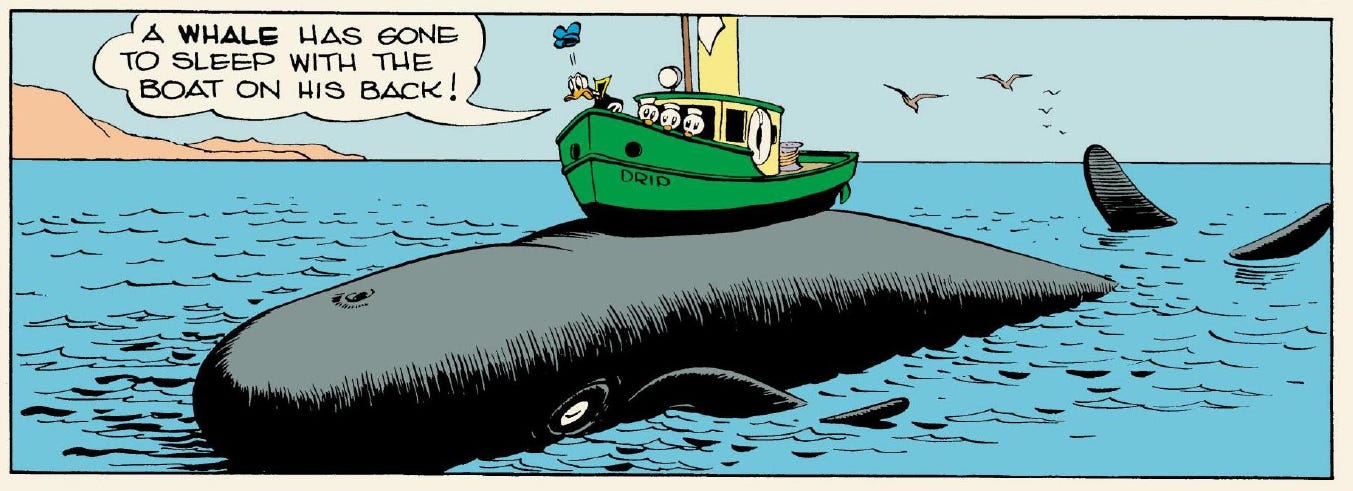
In typical Barks style, he cuts the whale down to size just as much as he would any other animal. This is not some incomprehensible gnostic Moby-Dick, but a temperamental and somewhat goofy animal just like the monkeys and birds Barks has portrayed before. Donald, in turn, treats it as he would a much smaller animal, and that generates the humor.
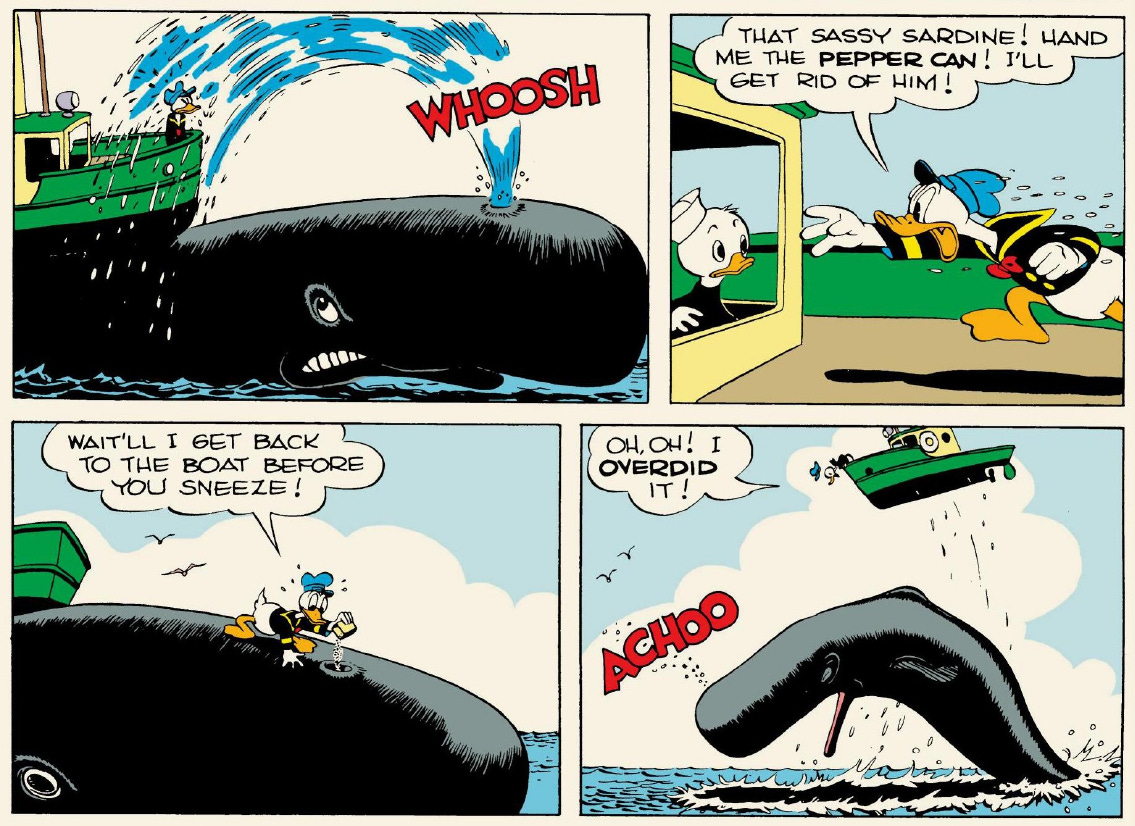
The entire pepper gag reduces the whale to a gag prop. Some of the humor comes from seeing such a majestic and just plain large animal reduced to undignified behavior—something that Barks would take to even more ludicrous extremes with a giant squid later. Again, Barks reserves any sort of mystical exaltation for the completely mysterious forces of fate. Any individual entity is ultimately just as banal as humans are, even if it might be more destructive and chaotic. The great whale still sneezes.
Making more of the big-small opportunity for humor, Donald tries to use an anchor to to hook the whale as he would a fish.
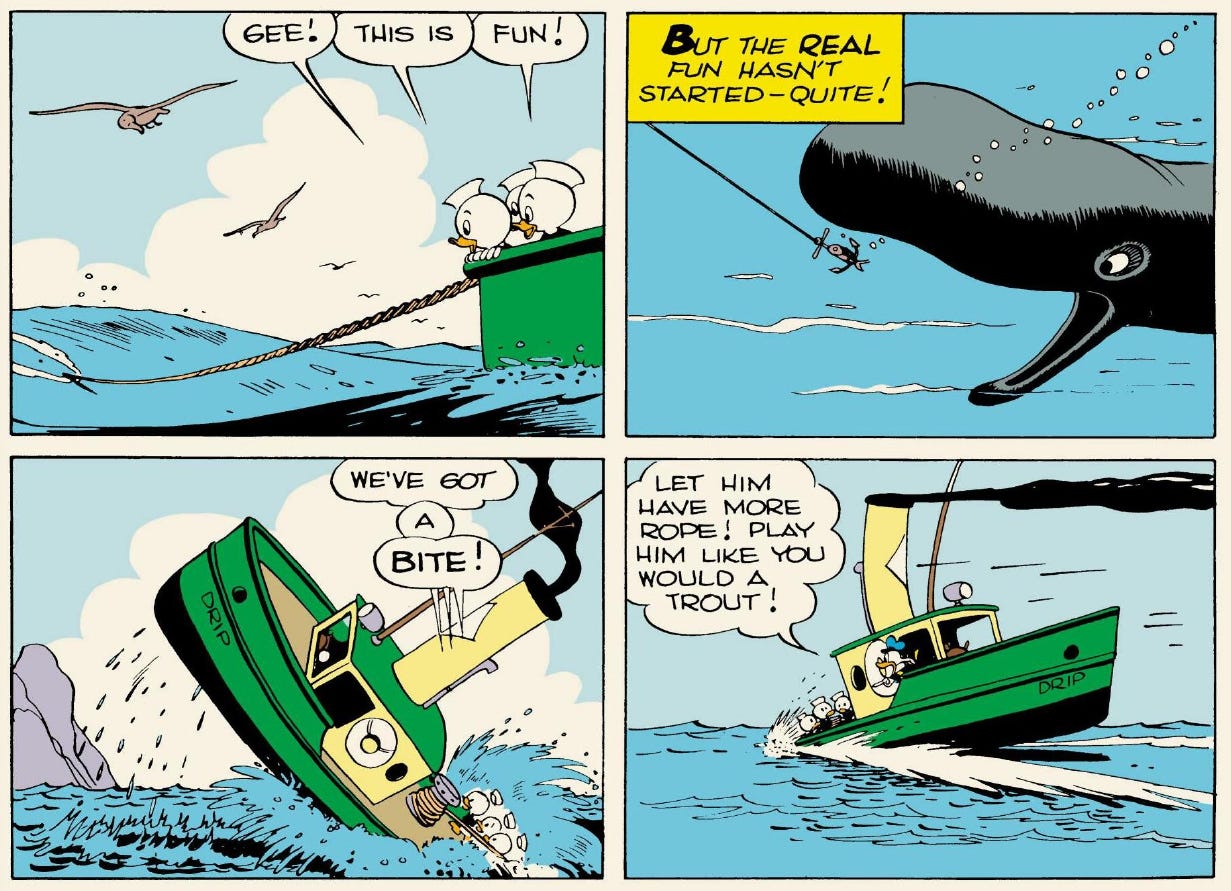
This is also pretty funny: fishing for a whale is absurd, and seeing the boat batted around by an enormous whale is ridiculous. Donald himself is overshadowed by the outsized craziness—later stories would place Donald at the heart of the mess and have him confront the full scope of the disaster. Here he’s simply oblivious.
Donald tries to anchor the boat to a rock, but…
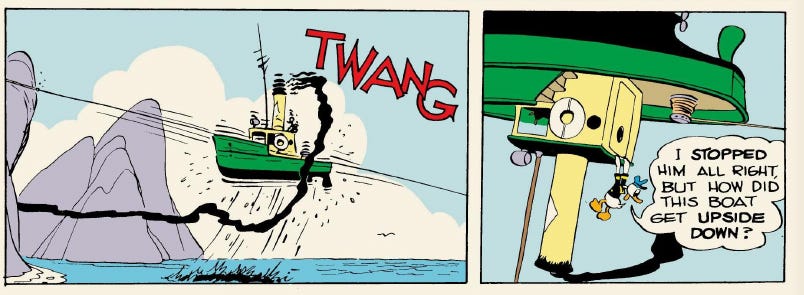
They drop into the ocean, only for the grouchy whale to fling the whole boat right onto a promontory.
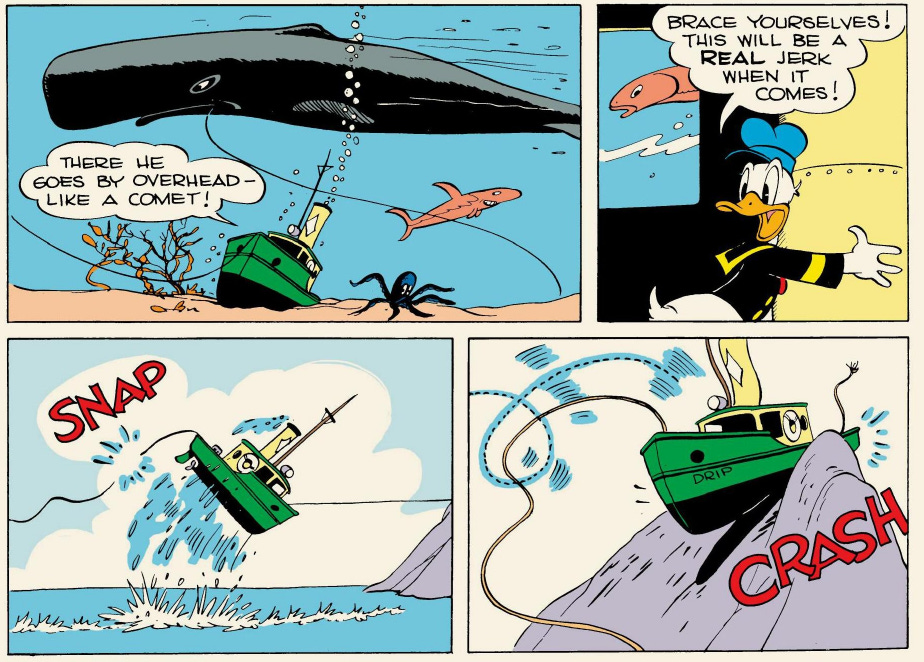
The sequencing of the action is nicely kinetic, and the humor again comes from the disparity between the hugeness of it all and the toy-like lack of inertia everything seems to possess. It’s a big story being made to feel small.
Having taken a shortcut to becoming Fitzcarraldo, Donald tries to dislodge the ship, but the beans have another idea:
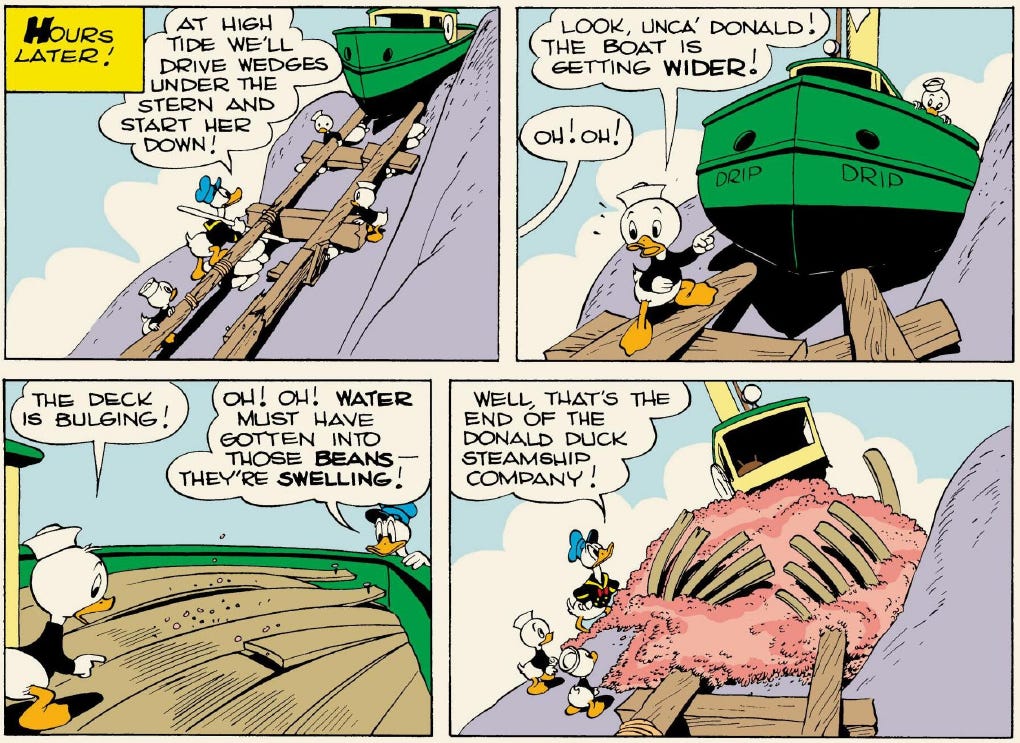
The story ends with them all deflated and Donald looking to sell pencils on a street corner. There’s not really much of an arc, just failures—the story’s distinctive features lie in its scope more than its execution. Barks is increasingly willing to collapse large and small-scale stories alike into a demystifying, resolutely anti-transcendental view of the world, where the only mysteries allowed are those of fate itself, but the realities of the world remain prosaic and funny.
While we’re talking about leviathans, there’s actually a bit more of a Hobbes connection than just the coincidence of the whale. Hobbes’s leviathan was the majestic and harsh collective of people under a sovereign:
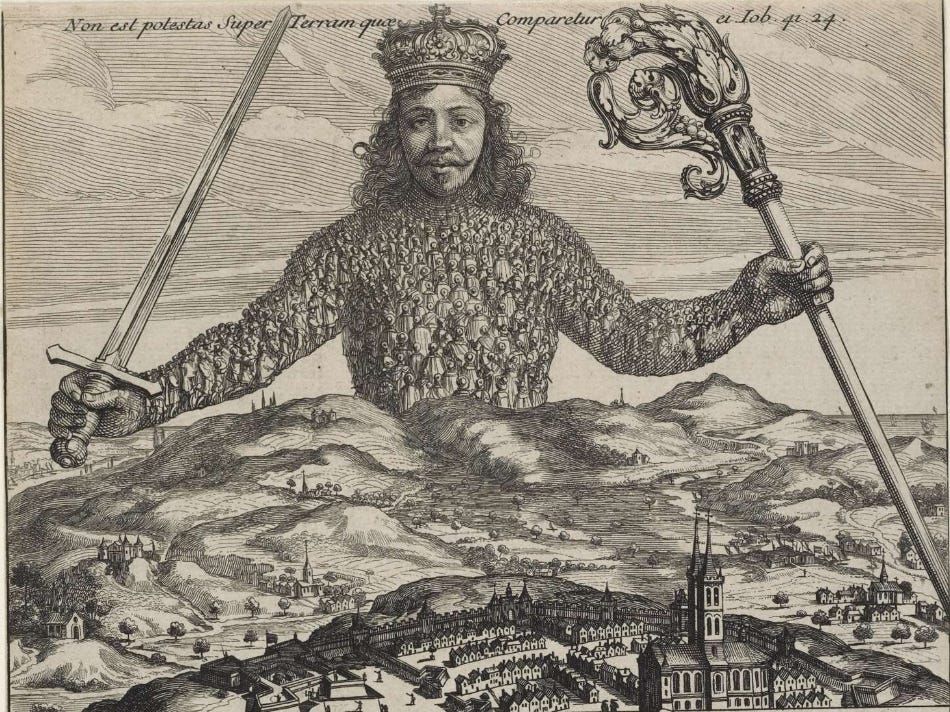
What we often get in Barks’s Donald comics is the undignified portrait of the whole from the perspective of one of the peons, who can’t even see the giant face. Donald just gets whacked by it in various unpredictable ways.
What’s the leviathan to Donald? The anonymous leg in the very first panel of the story:
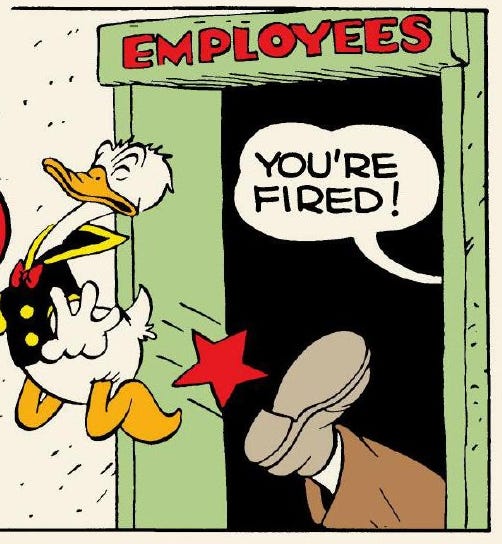
The whale, though? Just another component. Barks rarely indicates that any true sovereign has a face or is accessible at all to us. We’re just on its receiving end.